Physical therapy aides play a vital role in helping patients regain strength and mobility following major operations. These dedicated healthcare professionals prepare treatment areas, assist with rehabilitative exercises, and provide crucial emotional support during challenging recovery phases. According to the American Physical Therapy Association (APTA), supervised aides are an essential component of the physical therapy care team, allowing licensed therapists to deliver higher-quality, more focused patient care.
By handling essential clinical and administrative tasks, aides ensure that licensed physical therapists can focus entirely on specialized patient care. Reading this guide will give you a clear understanding of the specific responsibilities physical therapy aides handle during post-surgical rehabilitation and how you can pursue this rewarding career path.
Key Takeaways
- Physical therapy aides accelerate patient recovery by preparing equipment and ensuring treatment areas are safe for vulnerable post-surgical patients.
- These professionals provide hands-on assistance during basic exercises to help patients rebuild joint mobility and muscle strength.
- Administrative duties performed by aides, such as scheduling and documentation, keep the rehabilitation clinic running smoothly and efficiently.
- Working as an aide offers invaluable clinical experience for prospective students and a solid foundation for advancing in the healthcare field.
What specific tasks do physical therapy aides perform after a patient's surgery?
Physical therapy aides perform a mix of preparatory, supportive, and administrative tasks to facilitate a patient’s recovery after surgery. When a patient arrives at a clinic after a joint replacement or ligament repair, they often experience significant pain and limited mobility. The physical therapy aide is typically the first person to greet them, ensuring the treatment space is ready and guiding them safely into the facility.
According to healthcare industry standards, aides work strictly under the supervision of a licensed physical therapist or physical therapist assistant. To get a broader picture of what this looks like hour by hour, read our article on a day in the life of a physical therapy aide. Their daily duties include setting up therapeutic equipment, sanitizing treatment tables, and assisting patients in moving from waiting areas to exercise stations. By managing these fundamental tasks, aides allow the clinical team to treat more patients effectively.
How do aides help maintain a safe environment for post-operative patients?
Aides maintain clinic safety by rigorously sanitizing equipment, clearing walkways of tripping hazards, and setting up necessary supportive devices before the patient arrives. Post-surgical patients are highly vulnerable to falls and infections. An aide ensures that walkers, resistance bands, and treatment tables are clean and structurally secure. This meticulous preparation prevents secondary injuries and creates a sterile environment that promotes faster healing.
What kind of direct patient support do physical therapy aides provide?
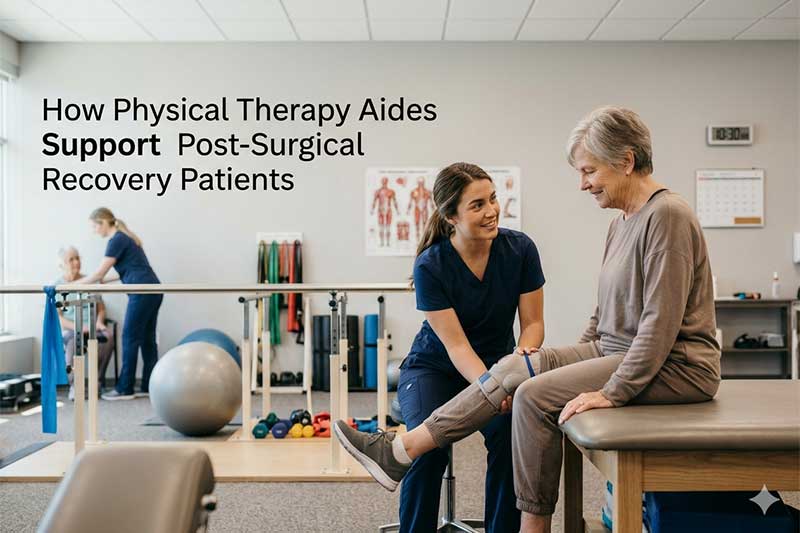
Physical therapy aides provide direct support by helping patients transition from wheelchairs to treatment tables and guiding them through basic, non-medical movements. A patient recovering from knee surgery might struggle to stand up or adjust their posture. The aide provides physical stabilization to prevent falls. While they do not diagnose or design treatment plans, aides often stand by to motivate patients and ensure they are using equipment correctly under the direct supervision of the physical therapist.
Why is the physical therapy aide role critical for physical therapists and clinics?
Physical therapy aides are critical because they maximize clinic efficiency and enhance the overall quality of patient care. Without an aide, a licensed physical therapist must divide their time between complex clinical evaluations and routine operational tasks.
By taking over the operational and basic supportive duties, aides enable therapists to focus entirely on the medical aspects of rehabilitation. This division of labor increases the number of patients a clinic can serve while maintaining high safety standards.
Here is a breakdown of how responsibilities are divided in a successful post-surgical rehabilitation setting:
| Responsibility Area | Licensed Physical Therapist | Physical Therapy Aide |
|---|---|---|
| Patient Assessment | Diagnoses mobility issues and creates treatment plans. | Observes patient comfort and reports basic feedback. |
| Treatment Execution | Performs manual therapy and complex joint mobilizations. | Assists with basic patient transfers and equipment setup. |
| Clinic Preparation | Specifies which machines or tools are needed for the session. | Cleans tables, fetches clean linens, and prepares machines. |
| Administration | Writes clinical progress notes for medical records. | Answers phones, schedules appointments, and files paperwork. |
How does working as a physical therapy aide benefit your healthcare career?
Working as a physical therapy aide benefits your career by providing hands-on clinical hours, building patient communication skills, and offering unparalleled networking opportunities. For prospective students considering a degree in healthcare, this role serves as a stepping stone. You will learn medical terminology, understand the workflow of a bustling clinic, and observe advanced therapeutic techniques firsthand.
Current students and working graduates often find that the experience gained as an aide makes them highly competitive candidates for advanced educational programs. According to the Bureau of Labor Statistics, overall employment of physical therapist assistants and aides is projected to grow 16 percent from 2024 to 2034 — much faster than the average for all occupations — driven by an aging population and an increase in orthopedic surgeries. Choose to start as an aide if gaining immediate, real-world clinical experience matters more to you than jumping straight into a lengthy degree program.
Take the Next Step Toward Your Healthcare Career
Post-surgical recovery is a challenging journey for patients, and physical therapy aides are essential to making that journey safe and successful. By keeping clinics organized, supporting physical therapists, and providing compassionate care to patients, aides form the backbone of the rehabilitation process. If you are passionate about helping others and want to gain immediate experience in the medical field, exploring a specialized educational program is your best next step. Reach out to an academic advisor to learn how comprehensive training can prepare you for this fast-growing, highly rewarding profession.
Post-surgical recovery is a challenging journey for patients, and physical therapy aides are essential to making that journey safe and successful. If you are passionate about helping others and want to gain immediate experience in the medical field, our Physical Therapy Aide training program at SOCHI is the next best step. Reach out to an academic advisor to learn how comprehensive training can prepare you for this fast-growing, highly rewarding profession.
Frequently Asked Questions
What types of surgeries require post-operative physical therapy?
Patients typically require post-operative physical therapy after orthopedic procedures such as total knee or hip replacements, ACL reconstructions, and spinal fusions. Therapy is also common after cardiac surgeries to help safely rebuild cardiovascular endurance.
Is a physical therapy aide the same as a physical therapy assistant?
No, a physical therapy aide is different from a physical therapy assistant (PTA). An aide handles clinic preparation, administrative duties, and basic patient transfers, usually requiring on-the-job training or a brief certificate program. A physical therapy assistant must complete an associate degree program, hold a state license, and can directly administer therapeutic exercises and modalities. For a full breakdown of the differences, see our guide on physical therapy aide vs. physical therapy assistant.
Do physical therapy aides need a specific college degree?
Physical therapy aides do not need a specialized college degree. Most employers require a high school diploma or equivalent, followed by on-the-job training. However, completing a targeted diploma or certification program in physical therapy assisting can significantly improve your job prospects and starting salary.
Can physical therapy aides create exercise plans for patients?
Physical therapy aides cannot create or modify exercise plans. Only a licensed physical therapist has the medical training required to evaluate a patient and design a post-surgical rehabilitation program. The aide’s role is strictly to support the execution of that plan under direct supervision.