Artificial Intelligence (AI) has moved from the pages of science fiction novels into the corridors of modern hospitals and clinics. It isn’t just a buzzword for tech giants anymore; it is actively reshaping how we diagnose, treat, and care for patients. From algorithms that can detect early signs of disease to robots assisting in rehabilitation, the landscape of medicine is evolving rapidly.
For those considering a future in this field, the rise of AI might seem intimidating. Will robots replace nurses? Will algorithms take over administrative tasks? The reality is far more optimistic and collaborative. AI isn’t here to replace healthcare professionals; it is here to empower them. It serves as a sophisticated tool that can handle repetitive tasks, analyze massive amounts of data, and allow human workers to focus on what they do best: providing compassionate, hands-on care.
This evolution means that the roles of medical assistants, billing specialists, and rehabilitation therapists are expanding. Understanding how technology integrates with traditional medical practices is becoming a vital skill. Whether you are looking into Medical Assisting, Medical Billing and Coding, or Sports Rehabilitation, knowing how AI impacts these fields can give you a significant advantage in the job market.
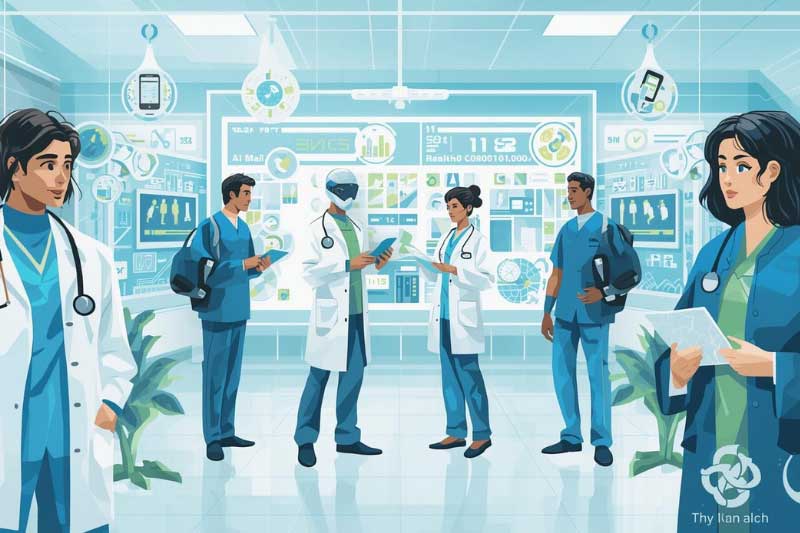
5 ways AI is transforming healthcare
Discover the top 5 ways AI is transforming healthcare. From better diagnostics to robotic surgery, learn how technology is revolutionizing medicine.
The Shift from Data Entry to Patient Connection
One of the most significant changes AI brings to healthcare is the automation of administrative burdens. Historically, roles like Medical Billing and Coding involved hours of manual data entry and cross-referencing. Today, AI-driven software can handle complex coding queries, verify insurance eligibility in seconds, and even predict claim denials before they happen.
This shift doesn’t make the human role obsolete; it elevates it. With the heavy data processing handled by intelligent software, Certified Medical Administrative Assistants (CMAA) and billing specialists can focus on the nuances that computers miss. They become problem solvers who manage the exceptions and ensure the financial health of the practice.
Furthermore, this efficiency frees up time for patient interaction. Administrative staff can spend more time clarifying financial questions for patients, coordinating care, and ensuring a smooth office experience. In a field defined by human connection, AI handles the “busy work” so professionals can handle the “people work.”
Enhancing Diagnostic Accuracy and Speed
For those entering the clinical side of healthcare, such as Medical Assistants or Registered Nurses (RNs), AI is becoming a powerful partner in patient care. AI algorithms excel at pattern recognition. They can scan medical images to identify potential issues—like fractures or tumors—faster than the human eye, serving as a second set of eyes for the medical team.
In a practical setting, this means a Medical Assistant might use AI-enabled tools to take vitals that automatically upload and flag irregularities in a patient’s electronic health record (EHR). This real-time data analysis allows the healthcare team to react swiftly to changes in a patient’s condition.
The curriculum at forward-thinking institutions is beginning to reflect this reality. Students trained in modern medical assisting aren’t just learning how to draw blood; they are learning to interact with systems that aggregate patient history, genetic data, and lifestyle factors to suggest personalized care plans. This collaboration between human intuition and machine precision leads to better patient outcomes.
AI in Rehabilitation and Physical Therapy
The impact of AI extends into physical therapy and sports rehabilitation as well. Traditionally, tracking a patient’s recovery relied heavily on subjective observation during clinic visits. Now, AI and wearable technology are bridging the gap between appointments.
Physical Therapy Aides and Sports Rehabilitation Therapists are increasingly working with motion-capture technology and AI-driven apps that monitor a patient’s movements at home. These tools can analyze whether an exercise is being performed correctly and track range-of-motion progress with mathematical precision.
This influx of data provides therapists with a clearer picture of recovery. Instead of guessing how a patient is doing between sessions, the data is readily available. This allows for highly customized treatment plans. For students pursuing an Associate Degree in Sports Rehabilitation Therapy, understanding how to interpret this data is becoming just as important as understanding anatomy. It allows for a more proactive approach to recovery, reducing the risk of re-injury and speeding up the return to peak performance.
The Unirplaceable Human Element
Despite rapid technological advancements, there is one aspect of healthcare that AI cannot replicate: empathy. A machine can analyze a symptom, but it cannot hold a patient’s hand during a difficult procedure. It cannot offer a comforting smile to a worried parent or understand the emotional nuance behind a patient’s hesitation.
This is why programs like those offered at the Southern California Health Institute (SOCHi) place such a heavy emphasis on soft skills alongside technical training. Whether you are studying Massage Therapy or Nursing, the ability to communicate, empathize, and connect with others remains the cornerstone of effective care.
As AI takes over the analytical and administrative tasks, the value of emotional intelligence in healthcare rises. Employers are looking for professionals who are tech-savvy but people-focused. They need individuals who can explain complex AI-derived insights to patients in a way that is comforting and easy to understand. The healthcare worker of the future is a hybrid: part tech-user, part compassionate caregiver.
Preparing for the Future of Healthcare
The integration of AI into healthcare creates a dynamic career path with opportunities for continuous learning. For students and career changers, this means that education is not a one-time event but a lifelong journey.
Entering the field now puts you at the forefront of this technological revolution. Training programs that offer real-world experience with modern equipment are essential. For example, learning on the same equipment used in hospitals ensures that graduates are ready for day one on the job.
Moreover, the rise of AI is creating new specializations. We are likely to see roles evolve into “Medical Data Interpreters” or “Tech-Assisted Rehabilitation Coaches.” By starting with a strong foundation in a program like Medical Assisting or Sports Rehab, you position yourself to pivot into these emerging niches as they develop.
Embracing the Change
The narrative that AI will destroy healthcare jobs is fading. Instead, it is becoming clear that AI will change healthcare jobs—largely for the better. It reduces burnout by handling repetitive tasks, improves accuracy in high-stakes decisions, and ultimately allows healthcare providers to spend more time doing what they love: caring for patients.
For those ready to embark on this journey, the key is to choose an educational path that recognizes this shift. Institutions that combine rigorous technical training with an emphasis on soft skills and real-world application are the best launching pads for a successful career in this new era of medicine. The tools of the trade may be changing, but the mission remains the same: helping people heal and thrive.